
Student working during Field Lab, 2017. Photographer, Jeanette Hart-Mann
Field Labs take place for six-weeks during the first half of the semester in Northern New Mexico and students explore the ecology of place while camping, cooking, and spending time together as a creative community. Students situate themselves in the environment, making experimental site-responsive works of art and learning from local community members, historical, cultural, and scientific content, and the ecology of place.
Students return to UNM-Main Campus after the Field Labs and center their research in creative studio processes, engage in group discussion, and complete artworks for a final public exhibition. At the end of the semester, the students work together to curate and install their exhibition and host this as a public event.
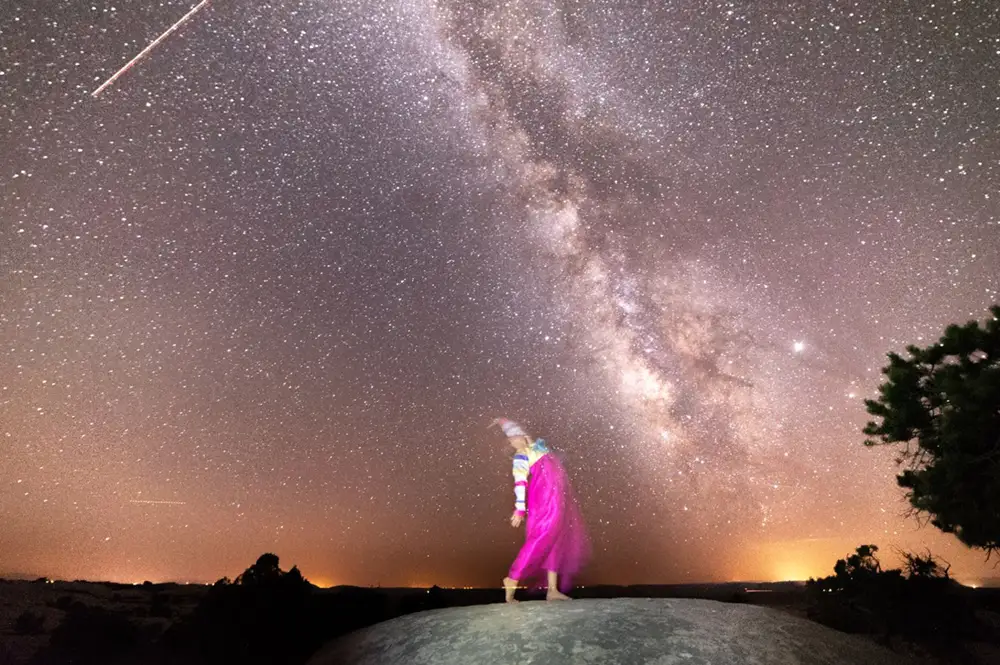
Student artwork during Field Lab, 2017. Artist and photographer, Ruby Pluhar
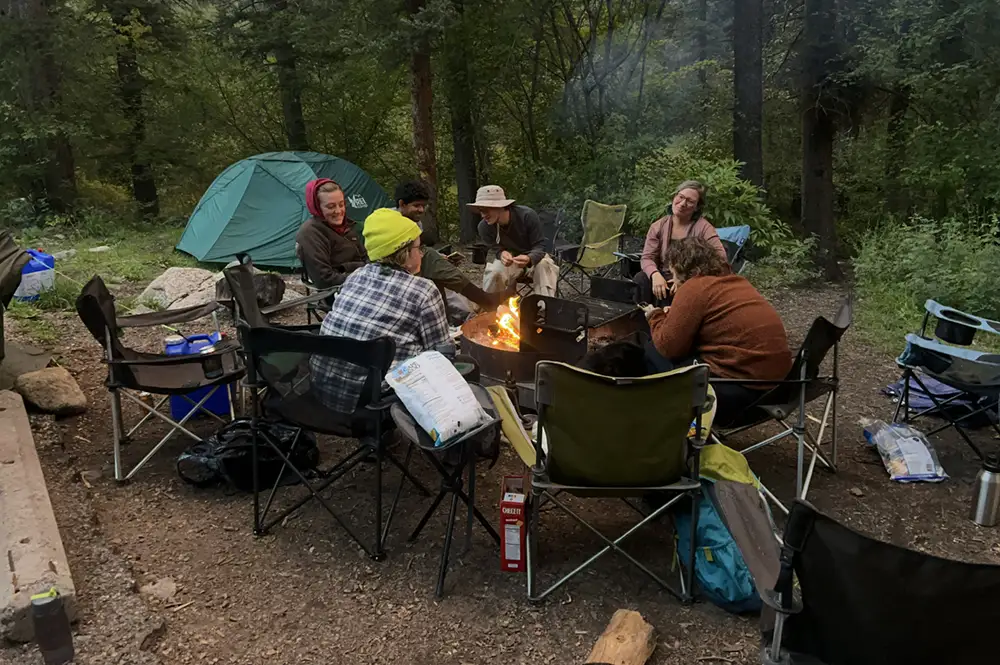
Students in discussion during Field Lab, 2024. Photographer, Kaitlin Bryson
Field Labs + Community Engagement
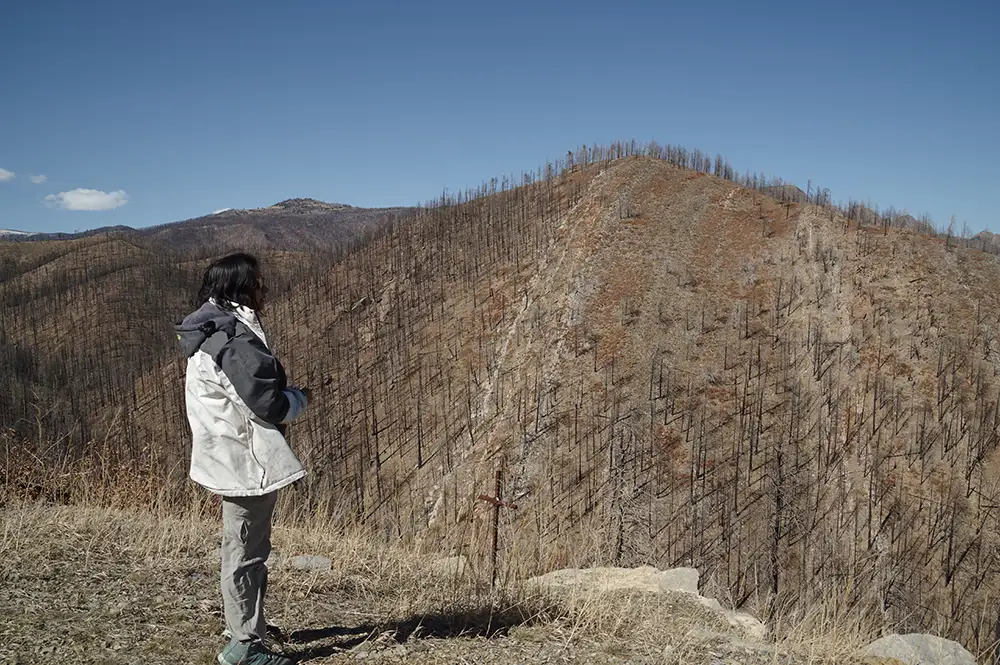
Student research during Field Lab, 2024. Photographer, Jeanette Hart-Mann
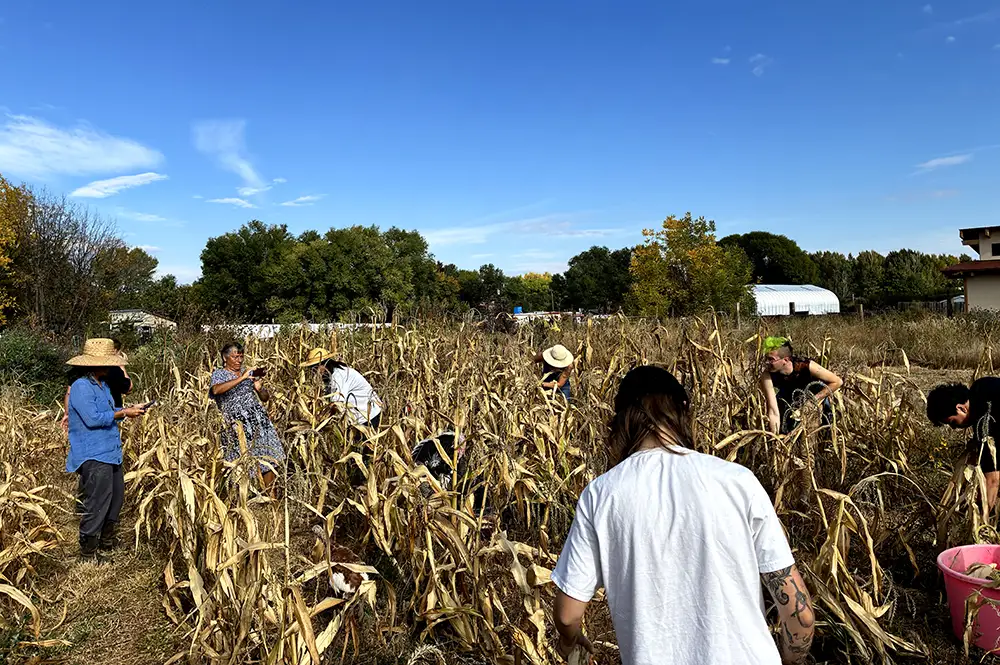
Community engagement during Field Lab, 2025. Photographer, Kaitlin Bryson
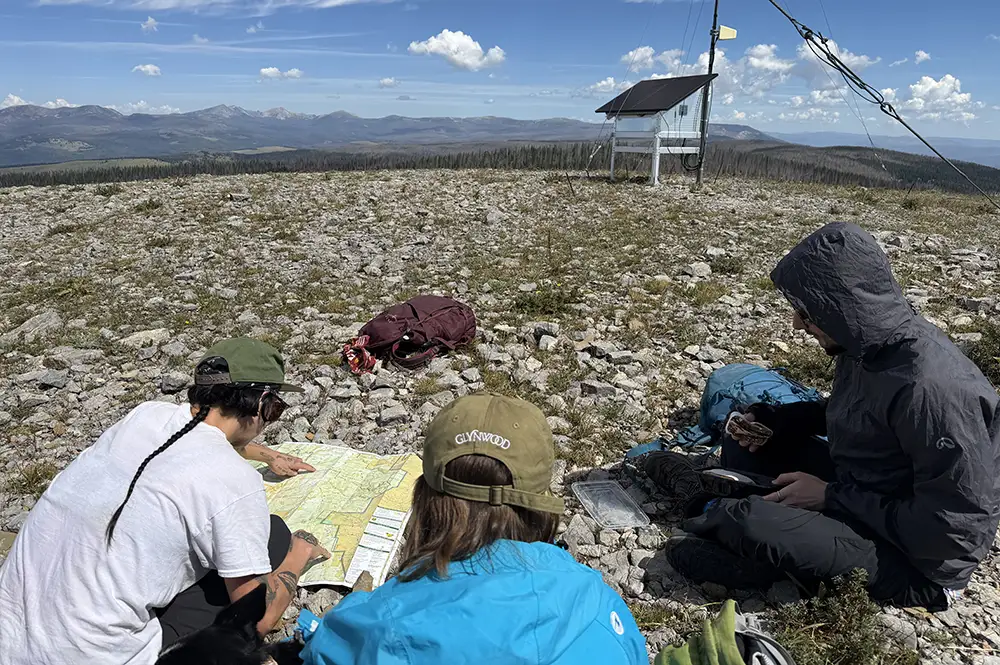
Watershed research during Field Lab, 2026. Photographer, Jeanette Hart-Mann
Creative Research + Site-Responsive Works
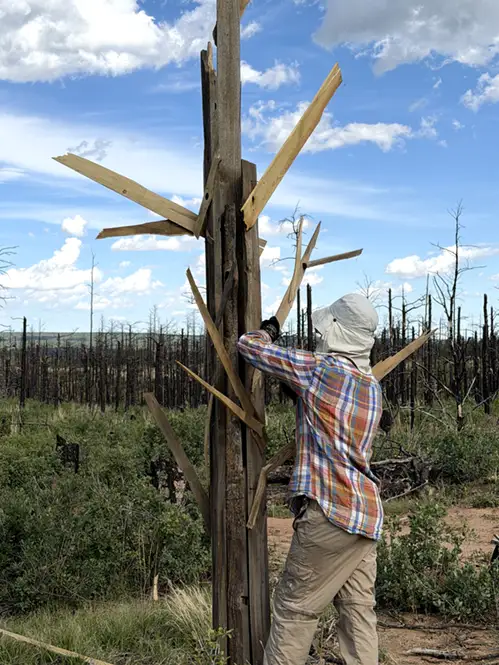
Student working during Field Lab, 2026. Photographer, Jeanette Hart-Mann
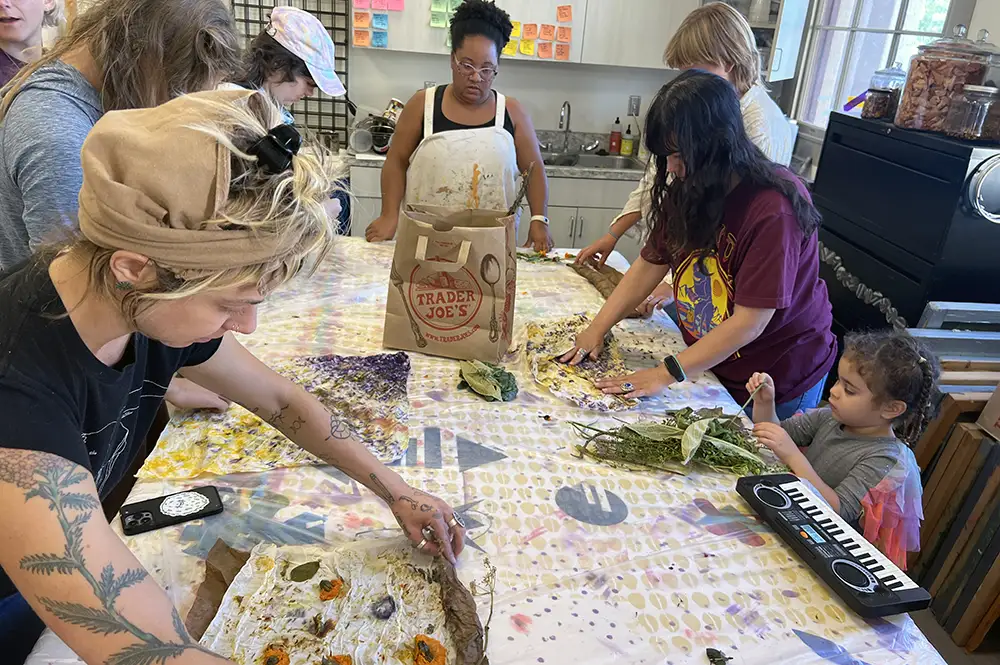
Visiting artist workshop with Adia Olguin, 2023. Photographer, Jeanette Hart-Mann
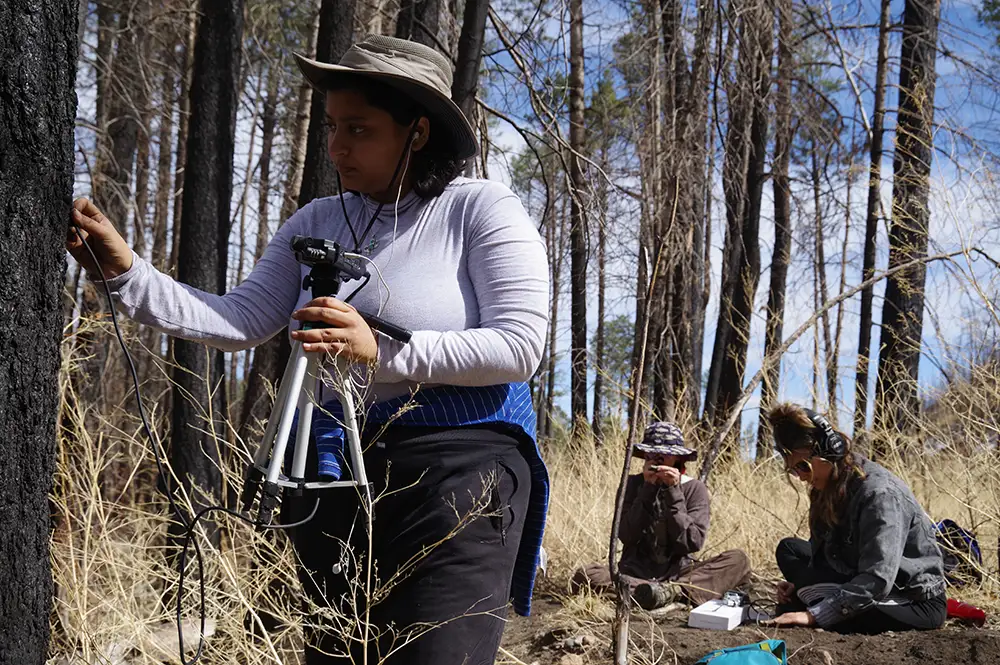
Student working during Field Lab, 2024. Photographer, Jeanette Hart-Mann
Public Exhibitions + Community Events
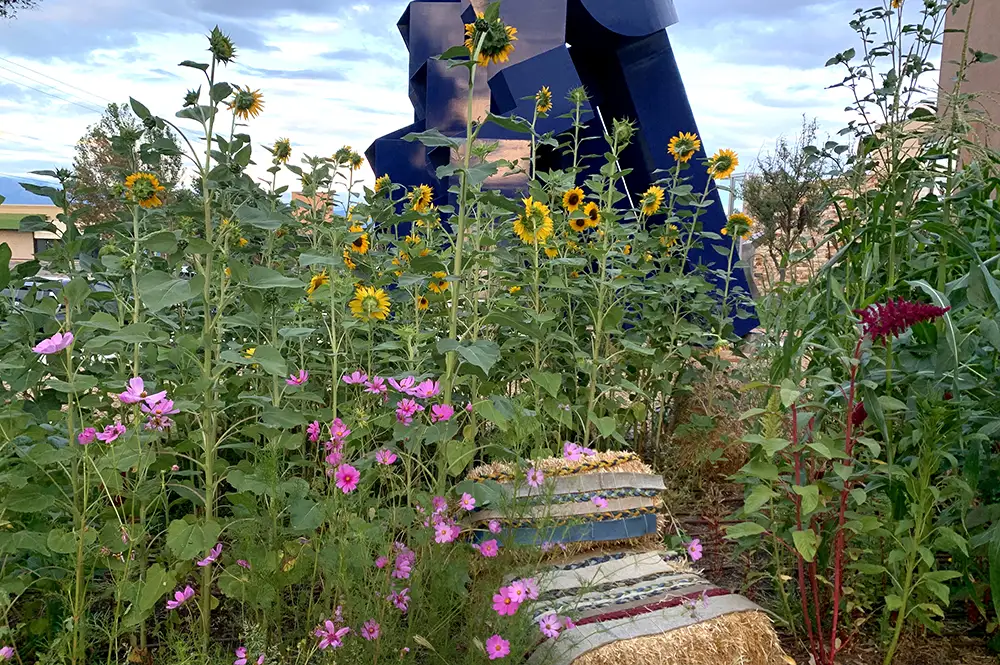
A Garden – The Living Room, public,site-responsive collaborative work, 2021. Photographer, Jeanette Hart-Mann
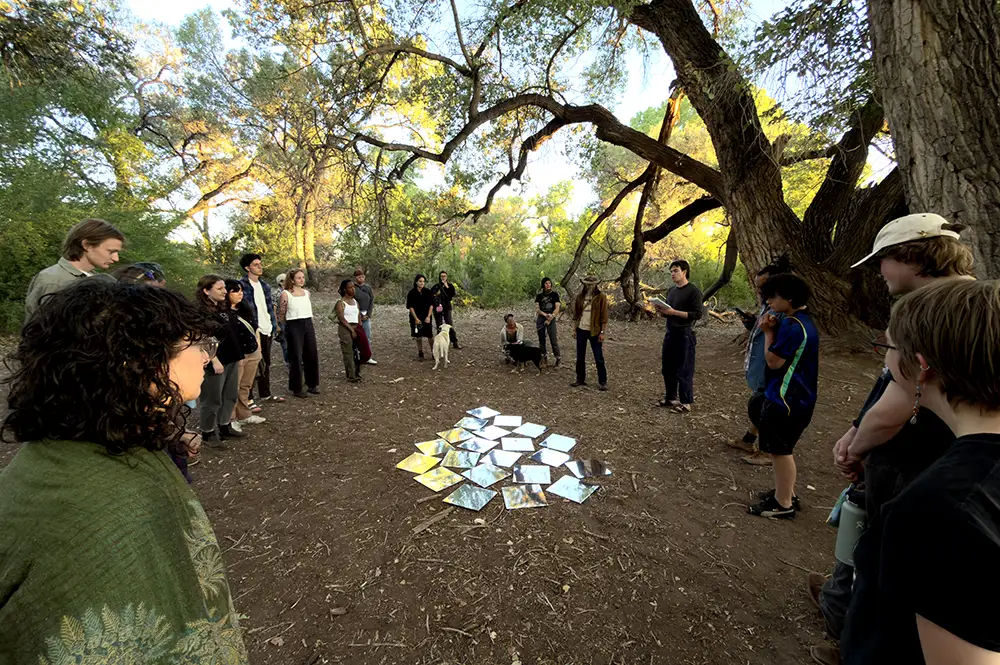
The Underground Library Exhibition, Boden Franklin’s artwork, 2026. Photographer, Jeanette Hart-Mann
How to Participate
RAVEL is made up of a series of co-requisite courses at The University of New Mexico and is only offered during the Fall Semester. Students sign up 9-12 CR of the following courses:
RAVEL: Research (3CR)
RAVEL: Field Lab (3CR)
RAVEL: Creative Production (3CR)
RAVEL: Exhibit (3CR)
Students must attend an informational meeting or meet one-on-one with faculty to register for RAVEL courses.
For more information:
Jeanette Hart-Mann, Associate Professor of Art & Ecology and RAVEL Co-Director
Kaitlin Bryson, Lecturer III of Art & Ecology, and RAVEL Co-Director

Exhibition, 2016. Photographer, Jeanette Hart-Mann
RAVEL History
RAVEL was formerly known as Land Arts of the American West, an experimental field-based art studio program founded in 2000 by Bill Gilbert and John Wenger at The University of New Mexico. Since then, many dedicated faculty have made a lasting impact on its evolution and legacy from Bill Gilbert 2000 – 2015 to Jeanette Hart-Mann 2009 – present, Ryan Henel 2014 – 2022, Kaitlin Bryson 2023 – present, and Catherine Harris 2009 – 2012. In 2023, the program was renamed RAVEL.